Monday, 27 April 2015

Did you change the locks after you moved home?

Surprisingly many of us fail to change the locks after moving home and are subsequently unaware of the fact we are potentially leaving our new home vulnerable to a break-in by anyone who may have obtained a house key during the previous ownership.

Get your locks changed after moving home
In 2013 we carried out a survey and found that 74% of homeowners in Britain didn’t call a local locksmith to change the locks when they moved into a new property. All participants in the study were asked whether they had changed the locks to their new home within a fortnight of moving in. The study found that people located in the south of the UK were more security conscious than those living in the North and Scotland, 35% of Southerners said they did get their locks changed, compared to just 20% of people located in the North of England and Scotland.

The majority of insurance companies will encourage you to change the locks on your new home as a basic home security measure as many policies will not pay out if an intruder lets themselves in with a key, usually a policy will specify there must be clear signs that a break-in has occurred. Therefore by not getting your locks changed after moving home you could run the risk of invalidating your home insurance policy.

Changing your locks after you have moved house is easy!

Simply call a local locksmith on 0800 035 0451 and pre-book a locksmith to change the locks on your new home.


Monday, 20 April 2015

The Future of Home Security

Home Security is literally getting smarter!


As technology has advanced increasingly over the last few years we are seeing more and more advances in the way we can secure our homes from an intruder.

Homes are getting smarter
For years we have dreamed of the idea of a fully functional smart home, the idea has even been depicted in movies i.e. the technology depicted in Back to the Future II such as keyless entry. Although the movie may not have exactly predicted the future for us i.e. hover boards, you may be surprised by the kinds of technology that are available to homeowners in 2015, right now you can control your heating and lighting from your smart phone or even text your fridge.

According to Mashable: “Right now we're seeing a myriad of independent smart appliances, but eventually these products will be programmed to work in tandem ... hence, the "Smart Home." Yes, there are smart Samsung refrigerators, and yes, there are smart Sony televisions -- but can they, or will they ever, be able to communicate with each other? If and when they do, the adage "If these walls could talk" will take on a whole new meaning.”

Already we are seeing ‘smart locks’ that allow a homeowner to open their front door using just their smart phone. Some of which even allow the user to let in guests when they are not at home. The ‘August lock’ was launched by an American Company in 2014 and is a keyless entry system which uses Bluetooth.

The August Lock allows home owners to enter without a key

As well as different types of keyless entry we are also seeing numerous home security apps being introduced to the market which allow you to control different parts of your home from either your phone or tablet. Although these sound great there are some reservations that have been raised by technology experts, in 2014 a study was carried out by HP to see whether these apps could be vulnerable to hackers. The security Company found that the biggest concern with these types of apps is the fact that the majority (8 out of 10) didn’t require consumers to use hard-to-hack log-ins which could leave their home vulnerable to being hacked.

To infinity and beyond!

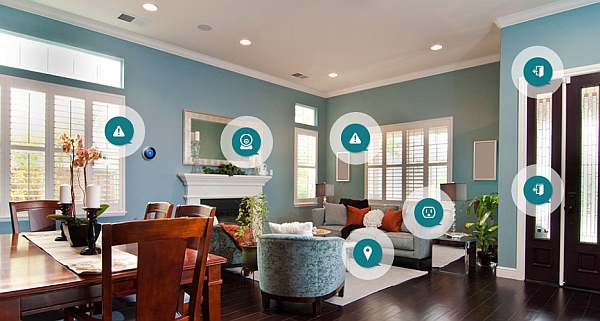
In 2014 Apple announced that they are working to develop a product called ‘Homekit’ which will allow homeowners to control lights, locks, cameras, doors, thermostats, plugs and switches. Although this is still very much in development other manufacturers are already building products to encompass Apple’s ‘Homekit ‘.

The future of home security with Apple's Homekit

Who knows what the future holds for our home security but we are sure it’s only going to get smarter!


Monday, 6 April 2015

Home Security and Home Insurance Requirements

When you take out a policy for your home with any insurer they will usually ask you to ensure that the security of your home meets their requirements.


Home Security and Home Insurance RequirementsWhy is it important to meet my home insurance provider’s requirements?

When assessing your home security it is important to consider which steps you should take to ensure you are meeting the requirements set by your home insurance provider. This is important as failure to meet these terms and conditions could result in your home insurance policy being invalidated should the worse happen. 


The Crime Prevention Website gives the following as examples of the requirements the majority of home insurance providers will ask a policy holder to meet *:

*Please be aware the examples given may differ to your own policy, therefore before making any changes to the security of your home it is advised to check your current policy for any requirements set by the insurance provider.

Final exit door i.e. your front door – The majority of policies will require that your final exit door (i.e. the main external door you use to access your home such as your front door) should have the following fitted:

  • Is fitted with a mortice deadlock with at least 5 levers; or is fitted with a lock conforming to BS3621: 1998 or to a higher specification.

  • Additionally where a door is double-leaf, the first closing leaf must be fitted with top and bottom key-operated security bolts.  Bolts must be positioned vertically so as to enter the framework of the door, not the opposing leaf.

Single external doors (such as a porch door) – A single external door should be fitted with one of the following:

  • Fitted with key-operated security bolts at the top and bottom.

  • Fitted with a mortice deadlock with at least 5 levers.

  • Fitted with a lock conforming to BS3621: 1998 or to a higher specification

French/Double doors – French or double doors should be fitted with two key operated security bolts at the top and bottom of the final closing door or, if not rebated, to both doors.  The bolts must be positioned vertically, so as to enter the top and bottom of the door frame, not the opposing leaf.

Sliding Patio Doors – In order to adhere to your home insurance policy, sliding patio doors should be fitted with an ‘anti-lift device’ such as the ERA Patio Door Bolts in order to prevent the doors from being lifted off their running tracks by an intruder when they are closed. They should also have either of the following fitted:

  • Fitted with two key-operated patio door locks on the inside of the doors at the top and bottom of the frame.

  • Fitted with a key-operated multiple locking system having at least two locking points.

Windows – All opening ground floor/basement windows and all windows that are accessible from another part of the exterior such as a roof, wall or balcony must have at least one key operated lock fitted. 


Monday, 30 March 2015

Stay secure over the Easter holidays

Don’t forget to be security conscious this Easter!

Stay secure this Easter with our home security tips
Last year Police across the UK urged members of the public to be more security conscious during the Easter break. This year we are doing the same by providing home security tips to staying secure whilst you enjoy the holidays.

Whilst enjoying any holiday period whether it be Easter, Summer or Christmas, the last thing on your mind will probably be the security of your home. However whatever time of year it is, it is still important to make sure your home security doesn’t lapse during these periods.

Don’t let a burglary ruin your Easter...

Many of us will be travelling or going on holiday during the Easter period which is why it can often be a prime time for a burglar to strike! Not all burglaries are opportunistic some are pre-planned where an intruder will watch your house so they know your daily patterns i.e. when you leave your house.

Don’t forget to lock up before you hop off 

If you are going away during the Easter break don’t forget to do the following:

  • Lock your doors and windows! Whether you are popping out just for the day or going away for a week it is really important to lock all of your doors and windows as the majority of home insurance providers will not pay out for a claim where entry was made through an unlocked door or window.

  • If you are going on holiday for a long period of time ask a trusted neighbour or friend to keep an eye on your house.

  • Ask the Royal Mail to hold any post during your holiday. Through the Royal Mail’s Keepsafe™ scheme your post and parcels can be held for up to 66 days. This will help to prevent post from piling up and alerting an intruder that your home is unoccupied.

  • Make your home appear occupied. Leave all blinds or curtains open and leave a light on (if possible) so it appears your home isn’t unoccupied.  If you can’t leave a light on it may be worth investing in a light with a timer, these can be purchased online.

  • Don’t share your holiday plans on any form of Social Media. Posting your plans could advertise that your home is unoccupied.

  • Lock your garage or shed. 


Monday, 23 March 2015

What are British Standards?

The Kitemark is used to indicate certification by the British Standard InstitutionYou may have noticed some products are branded with a certification known as the ‘Kitemark’ (pictured on the right), which is used to indicate certification by the British Standard Institution, but only where a Kitemark scheme has been set up around a particular standard. 

So what are British Standards?

“In essence, a standard is an agreed way of doing something. It could be about making a product, managing a process, delivering a service or supplying materials – standards can cover a huge range of activities undertaken by organizations and used by their customers.” (BSI Group)


British Standards in the locksmith industry...  


For example Home Insurance providers will specify that all external wooden doors such as your front door are fitted with a British Standard deadlock. 

British Standard and Home Security

When assessing the security of your home you may want to consider upgrading your cylinder to one that protects you against the five most common methods of attack:

•       Drilling
•       Picking
•       Snapping
•       Bumping
•       Plug Extraction

The majority of cylinders with a kitemark such as ABS High Security cylinders will help to protect your door from these types of attack. 

The Door and Hardware Federation strongly advise that in order to effectively protect your home from any type of attack to update your cylinder to one that is to the TS007 Kitemark standard.

TS007:2012 – What is it?

TS007:2012 is a Technical Specification that has been produced in the form of a document by the Door & Hardware Federation (DHF) and the Glass and Glazing Federation (CGF). The DHF and CGF worked closely alongside Secured by Design (the Association of Chief Police Officer’s crime prevention initiative) to develop the TS007 Kitemark standard. 

Meeting the TS007 standard...

The TS007 standard is characterised by a star rating and also uses a third party certification mark, typically the Kitemark. The star rating will also be imprinted on the cylinders and door furniture. It provides a mix and match approach with the ability to interchange cylinders and security hardware giving a flexible way to achieve the three star rating.

TS007 standard – How it works...

TS007 star rating system explained
Understanding the TS007 star rating system for uPVC doors


Monday, 16 March 2015

uPVC Specialists

Our local locksmiths are uPVC specialistsWhatever situation you are in it can be extremely stressful to find that your uPVC door or window is not functioning correctly. This can not only be stressful but can be a high risk to the security of your home, especially if the uPVC door is jammed in the locked or unlocked position. This can be due to various factors, including the sudden change in the weather or basic wear and tear.

Any issues with a uPVC door should be rectified as quickly as possible as you may be subsequently vulnerable to a break in and failure to get the uPVC door repaired could result in invalidating your home insurance policy.

Here at Keytek™ all our Locksmiths are fully trained and skilled in uPVC doors and windows. A quick call to Keytek™ on 0800 035 0451 and we will have an engineer on site and nine times out of ten are able to resolve this issue on the first visit. 

Here are some of the terms a local locksmith may use:

uPVC Doors:

British Standard/BS3621 - The BS3621 signifies that a lock has been tested by the British Standards Institute and has met all of the relevant standards. It is widely recognised by the public and the majority of UK insurers as a sign of quality.

Cylinder - The key operated part of most locking systems. Available in many formats such as Euro profile, Rim type and Oval.

Anti Snap Cylinder - A cylinder specifically designed to help prevent cylinder or lock snapping. The ABS High Security Euro Cylinder is the only security cylinder currently on the market which has a TS007 3 star rating, SS312 Sold Secure Diamond Accredited and Secured by Design Accreditation combined.

Deadbolt - A solid bolt that protrudes from the Forend of the lock into the ‘Keep’ fitted on the door frame.

Double Locking - A function that offers an extra locking facility on top of the standard operation.

Furniture - Any hardware fitted to a door other than the lock itself. Handles, door knocker etc.

Hook Bolts - Similar in principal to dead bolts, although for added security hook bolts pivot out of the case and swing up or down into the frame.

Latch - Usually found used in conjunction with a number of other locking points (such as deadbolts).

Spindle - A square bar that runs between two handles, passing through the lock body itself to allow the latch to be retracted when a handle is operated.

Thumb Turn - A euro profile cylinder in place of the internal Key way to allow easy or quick egress.

Hinge Bolts - Small round lugs that are drill into the spine of a door and engage into keeps in the frame when the door is closed. Designed to prevent a door being lifted from its hinges and removed unless open.

Suite (Locks) - More than one lock manufactured in sequence or to a specific non-random pattern.

Master Key - A key that is designed to be able to open more than one lock.

Monday, 9 March 2015

Be funny for money!

On Friday 13th March everyone here at Keytek™ will be taking part in Red Nose Day in aid of Comic Relief.

As part of the day each member of staff will be invited to take part in the following fundraising activities for a small donation. All monies raised on the day will be donated to Charity ‘Comic Relief’.
Keytek Locksmiths are fundraising for Red Nose Day

  • Breakfast at your desk – Always a popular choice here at Keytek™ especially when it’s to raise money for charity. During the morning of Friday 13th March the Charity Team will serving up some real treats for members of staff in turn for a small donation. Treats include crumpets, tea cakes and waffles.
  • Red Nose dance off – Members of staff will be invited to take part in a virtual dance off for the chance to win a mystery prize. To make it a little bit harder contestants will have to keep a Red Nose on whilst they get their groove on... the contestant with the highest score and who has dropped their nose the least will be the winner! Stay tuned for the hilarious photos...


The final total raised for Comic Relief will be announced on Monday 16th March!